Don’t just control the risks of working on energized equipment, remove your people from the hazard zone.
At CBS ArcSafe, safety is our mission. That often means providing the highest quality remote operation equipment available, but we’re also committed to advancing electrical safety through education and innovation.
Our team recently participated in the annual safety meeting of a major metal manufacturer that operates dozens of locations in the U.S. We led a series of 45-minute breakout sessions for the company’s safety and maintenance personnel, who were well-versed in the hazards, safety programs, arc-rated PPE, and NFPA 70E training protocols. What many of them were looking for were practical ways to avoid exposure to arc flash risk, rather than simply managing it.
For decades, the governing assumption was that the job of a safety program was to control the risks associated with qualified people working on or near energized equipment. Procedures, training, and protective clothing were all developed around that premise, but the industry is now asking whether technicians need to be standing in front of it at all.
Where the Conversation Got Practical
Equipment condition and arc flash risk are closely linked. Arc flash incidents tend to trace back to degraded insulation, loose or corroded connections, contamination, moisture, or a component operating well past the point where it should have been inspected. That connection creates a familiar problem. Maintaining equipment properly means interacting with it, and some of the highest-exposure tasks in an industrial facility — racking a breaker in or out, switching under load — are part of routine maintenance operations. The work that keeps equipment safe can be the riskiest tasks performed on it.
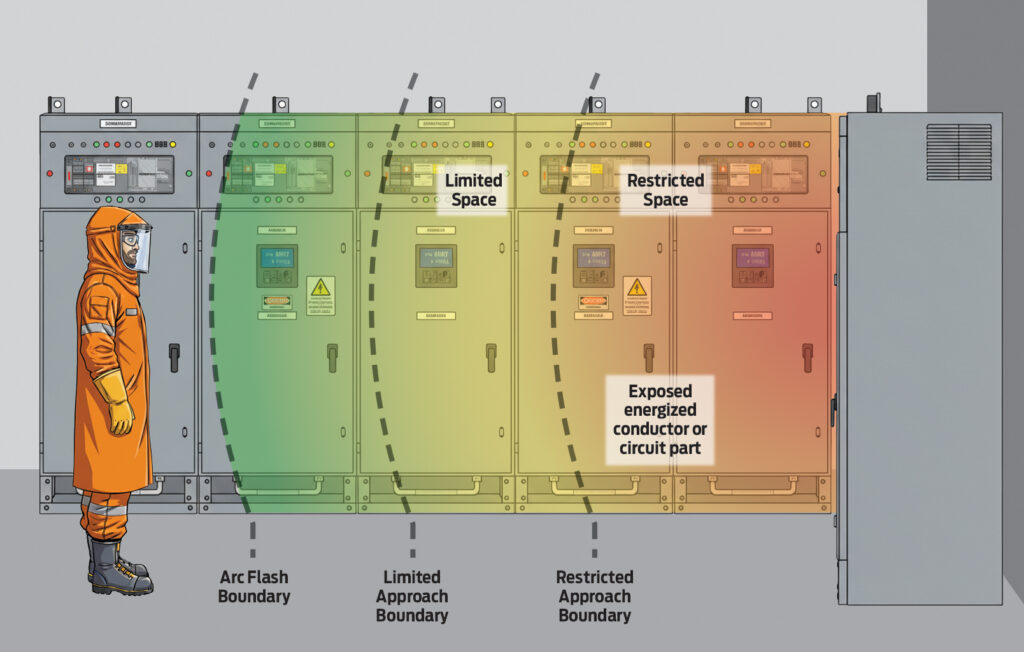
The hierarchy of controls places deenergizing equipment at the top, but production schedules, process continuity, and system design often rule out that option. The next most effective step is an engineering control: changing the task so the hazard can’t reach the person. Remote switching and remote racking systems let an operator perform tasks from outside the arc flash boundary to reduce the risk of arc flash injury.
That capability fueled dozens of conversations at our vendor table and in between sessions. We were encouraged by the interest in remote operation for the equipment the metal manufacturer’s operations already run. Those conversations are continuing and several have turned into plans for site visits in the months ahead.
If your team is working through the same questions, we’d welcome the chance to have that conversation with you. Contact CBS ArcSafe to discuss training or a demonstration at your facility.