
Following Data Center World 2025, the team at CBS ArcSafe was invited to visit a northern Virginia data center campus. The new owners had only recently acquired the facility and wanted to evaluate options for improving safety, specifically around remote operation of main circuit breakers with high incident energy.
At first glance, the ask was straightforward: assess opportunities for remote racking and remote switching. What we found told a much bigger story.
New Ownership, Old Infrastructure
This scenario is becoming increasingly common: As data centers change hands, new operators inherit facilities built under very different assumptions, often with aging electrical infrastructure and limited documentation.
In many cases, these sites were historically run with one overriding priority: uptime. Preventive maintenance, while acknowledged as important, was often deferred to avoid disruption. This results in systems that appear functional on the surface but carry hidden risk.
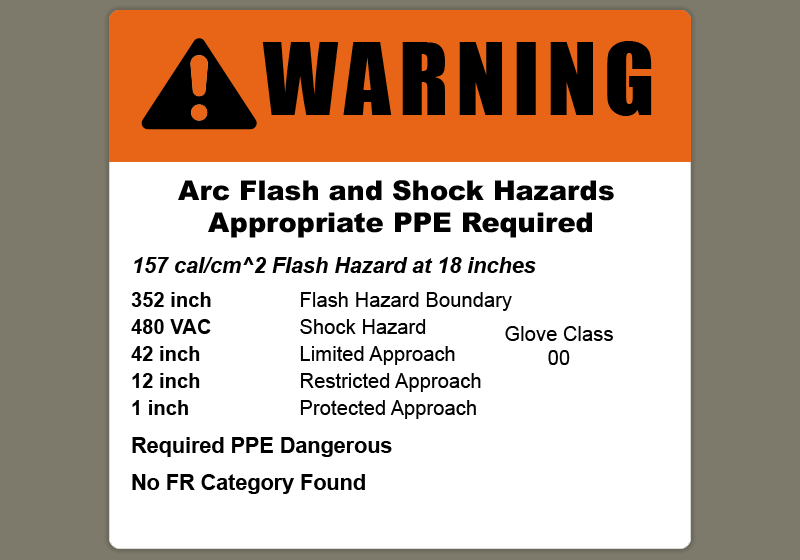
During the walkthrough in Virginia, several issues stood out immediately. In one breaker cubicle, a unit failed to operate within the expected timing when the close and trip buttons were engaged. That delay might seem minor, but it can significantly increase the energy released during a fault event. In this case, the calculated incident energy was already 157 calories. A delayed trip time would exponentially increase the amount of incident energy and the risk to personnel and equipment.
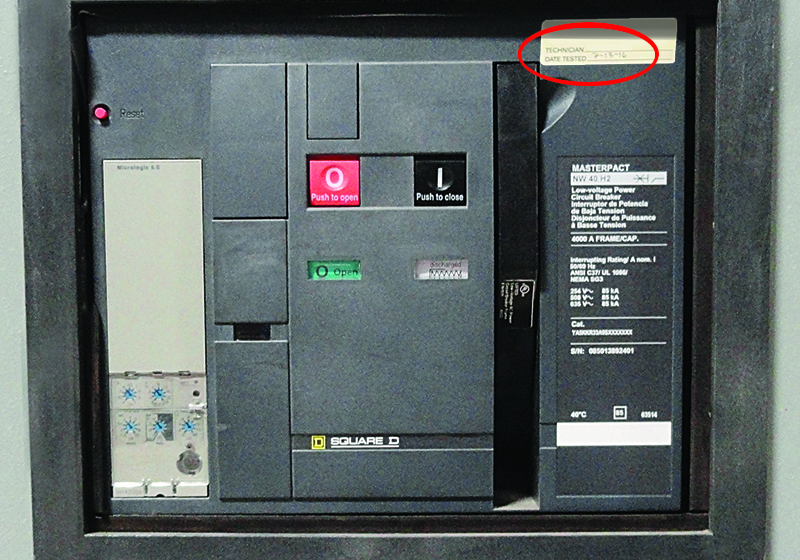
Elsewhere, testing stickers revealed that some breakers had not been serviced since 2016. Critical spare components showed signs of hardened lubricants on finger clusters, raising concerns about whether they would function properly if needed. And in at least one case, a motor control panelboard was missing a single-line diagram altogether, making troubleshooting and safe operation more difficult.
Individually, these issues might not raise alarms. Together, they point to a systemic gap.
These Issues Are More Common Than You Think
This case wasn’t an outlier. In many enterprise data centers, equipment is aging or approaching obsolescence, documentation is incomplete or outdated, maintenance cycles have been inconsistent, and new ownership lacks full system history.
Yet uptime is still non-negotiable. That combination creates a dangerous disconnect: infrastructure that requires attention paired with operational pressure that discourages it.
Where Remote Operation Fits and Where It Doesn’t
Remote racking and switching are often introduced as a safety solution, which they are. By allowing operators to work from a distance, these systems reduce exposure to arc flash hazards during high-risk tasks. In this case, CBS ArcSafe was able to implement remote solutions that immediately reduced personnel risk during key operations.
But it’s important to remember that remote operation doesn’t replace maintenance. It’s one layer of protection — not a substitute for system health. Beyond addressing immediate safety concerns, the more valuable outcome of the visit was a clear roadmap for the site with additional products and services from our fellow Group CBS companies.
Key priorities included:
- Establishing a consistent breaker maintenance program
- Conducting an updated arc flash study
- Rebuilding and validating single-line diagrams
- Implementing a structured critical spares program
The Takeaway for Data Center Operators
If you’re managing or acquiring a data center, this story might feel familiar. The biggest risks are rarely the ones you can see. Assumptions about maintenance, documentation, and system performance go unchallenged over time.
Remote operation can help reduce exposure during maintenance and other outages. But long-term safety and reliability come from understanding and maintaining the system as a whole. When a fault occurs, the difference between a controlled event and a catastrophic one often comes down to details.
With Group CBS, customers leverage the Power of One: a single group for complete electric lifecycle solutions. CBS ArcSafe and our partners can streamline your electrical needs from initial engineering design and commissioning through long-term maintenance.
If you’re unsure about the condition of your electrical infrastructure, now is the time to take a closer look. Contact CBS ArcSafe to schedule a safety assessment and identify potential risks before they become costly events.